




Our Values
-

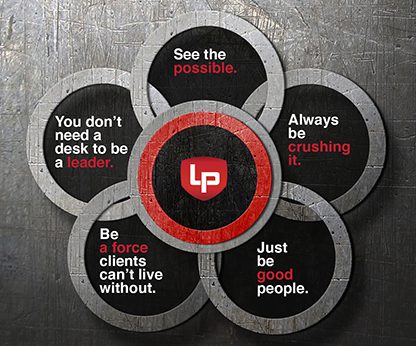
See the possible.
We’ve created a lasting success story by finding value in things others discard or take for granted, and see possibility where others see expendability. We take this full-circle every day by turning pill bottles into office furniture and raw talent into valued expertise. And, most importantly, by understanding what a diverse collection of people can accomplish when the chemistry is just right. Seeing the possible is in our blood. It is born from the sweat and smarts of those who worked here before us and it’s our responsibility to pass it on.
-
Always be crushing it.
If we bring it every day and do it right, do it the honest way, the ethical way, with our sleeves rolled up, our minds engaged and hearts aligned, we can change winning from an outcome to an expectation. Because when we win, when we crush it, we build a brighter future for ourselves, our clients, our families, our communities and the planet.
-
Just be good people.
Problems and solutions rarely come in tidy black and white packages. That’s why it’s the gray areas that test every company’s and team member’s standards and beliefs. So when the rubber hits that gray road and our clients, families and community need us to make the right choices, we fall back on four simple words: Just be good people. It’s why we support each other and our community, have education programs for our children and believe in practical sustainability. Bring those four words to work every day and good things will always happen.
-
Be a force clients can't live without.
We aren’t paid to handle our clients’ scrap, we’re paid to find the best solution for handling our clients’ scrap. This means we have to anticipate change and strive to find the answer before they see the problem – because your next idea will be the one that increases their bottom line, makes their lives easier and builds an enduring trust with our company.
-
You don't need a desk to be a leader.
Whether you sit at a desk, on a forklift, or behind the wheel of a truck, the opportunity to be a key contributor to our company is there for the taking. Your desire and ability to learn and grow is what drives our business, makes us safe, and keeps our clients coming back for more. When you step up, the rest of us – your family, team members, our clients and the community – rise with you.
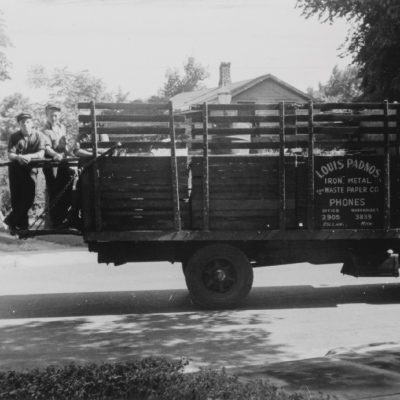
It's been 100 years and we're just getting started.
At PADNOS, recycling is in our DNA. Our ongoing commitment to the pursuit of better ideas ensures that we bring you cutting-edge advancements that translate into significant improvements to your bottom line. And we aren’t just striving for better solutions, we’re delivering them, with newer, more efficient equipment and smarter, more effective programs, services and customized solutions that integrate seamlessly into your processes. Whatever the type or size of your business, PADNOS helps you get more value from your scrap metal, paper, plastics and electronics, and more return on your investment.
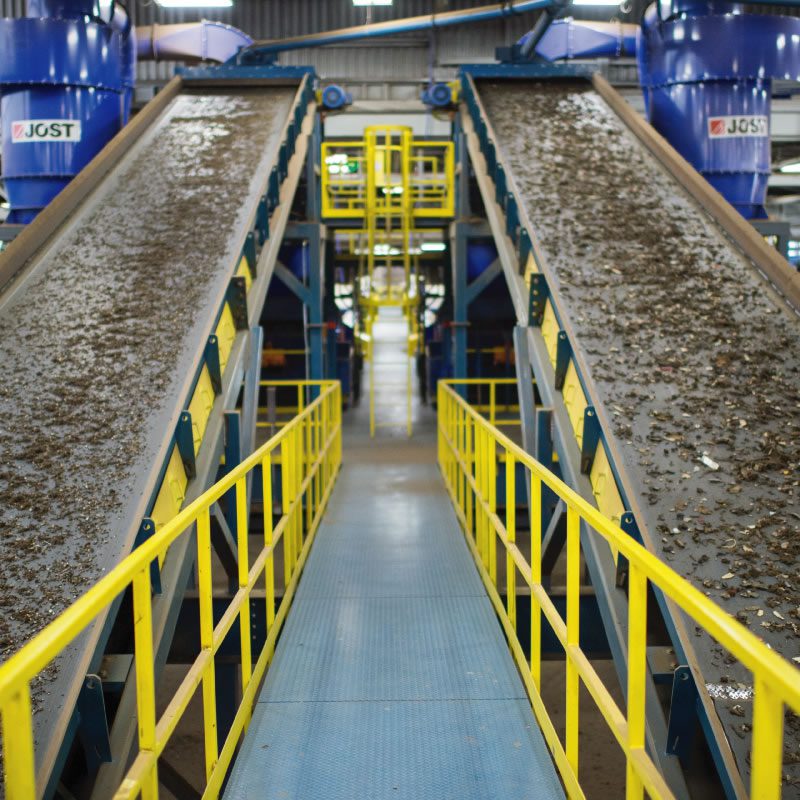
Let our innovation impact your bottom line.
For over 100 years PADNOS has been transforming scrap into reusable resources. It’s personal to us, as a fourth-generation, family-owned and operated company our extensive capabilities, deep resources and varied locations can handle your biggest challenges. We also have the agility and enthusiasm to provide swift, responsive service. Boosting efficiency and savings, reducing hassles, and improving your environmental impact is what we do best. Get in touch and see how we can help you take recycling to the next level. We’re ready to go.
Affiliations, Certifications, and More
Affiliations
- Recycled Materials Association (ReMA)
- Michigan Recycling Coalition (MRC)
- West Michigan Sustainable Business Forum (WMSBF)
- Michigan West Coast Chamber of Commerce (MWCCC)
- American Copper Council (ACC)
- Society of Plastics Engineers (SPE)
- Michigan Manufacturers Association (MMA)
- National Association of Manufacturers (NAM)
- Scrap Theft Alert
Certifications and More
- Our electronics processing facility located at 1862 Alpine Avenue in Grand Rapids, Michigan, is certified by R2v3 and RIOS:2016
- Our Quality Management System to reprocess and distribute scrap metal is registered to the ISO 9001:2015 standard.
- Our Quality Management System to reprocess and distribute scrap plastics is registered to the ISO 9001:2015 standard.
- Issued by the China Certification and Inspection Group, the Administration of Quality Supervision, Inspection, and Quarantine (AQSIQ) certifies us to sell scrap materials to China.
- End of Life Vehicle Solutions Corporation (ELVS) Mercury Switch Removal Collection Participant.
- Registered by the State of Michigan Department of Environmental Quality to collect and process Electronic Scrap (2024 Registered Electronic Waste Recyclers).
- Our team is committed to exceed the needs of our customers as outlined in our Quality Policy.

Frequently Asked Questions
What are your hours?
Here at PADNOS, our hours of operation depend on the location you are intending to recycle at. To find the hours, go to our locations site and enter your location to see the hours for the closest site to you.
What are Holiday hours?
We are closed Christmas Day, New Years, Memorial Day, July 4th, Labor Day, and Thanksgiving. For more information on hours, call our customer service line, (616) 396-6521, or go to our locations page for more details.
What is the hiring process at PADNOS?
Click here for more information on our hiring process.
What are scrap prices in Michigan?
Here at PADNOS, our prices for our metal and electronics are constantly changing based on the market fluctuations, for more accurate pricing, please call the recycling center where you intend to recycle your material.
Do you sell material?
We only sell our material commercially.
What are metal scrap prices currently?
Sheet Iron is priced differently depending on the location you are intending to scrap at, we measure it by the Gross Ton (Gross Ton: 2,240lbs). For more accurate pricing, please call the recycling center you intend to recycle your material at.
Do you recycle appliances?
Yes, here at PADNOS we recycle appliances. For more information, please call the location where you intend to recycle your material.
Do you accept paper and plastics?
We only accept paper and plastics in large quantities that are baled.
Do you accept cardboard?
Yes, we do accept cardboard free of charge. You must flatten your cardboard before you bring it to one of our locations.
Do you accept refrigerators?
Yes, we do accept refrigerators!
Do you accept batteries and/or electronics?
Yes, we accept household electronics such as laptops, desktops, cell phones, TVs and monitors. We also accept the following batteries (terminals must be taped): Ni-CD, Ni-MH, Lithium, Polymer, Alkaline (no tape required on Alkaline), and more! We do not accept household appliance batteries, such as AA or AAA batteries.
Do you offer junk car pick-up?
We partner with several different services; you can call our customer service line: (616) 396-6521 to get more information.
How much cash can I get for my junk car?
At PADNOS, we pay for vehicles based on weight. Cars are considered sheet iron which is measured by the Gross ton. We require the title of the vehicle that is being scrapped. For more information, please call the recycling center you are intending to scrap at.
Do you take catalytic converters?
Yes, we take catalytic converters! All customers must come to one of our locations to receive price information. We will not provide price information over the phone. Payment will also be held for 24 hours if payment is over $25.
Do you accept propane tanks?
Yes, we will accept up to 4 propane tanks and will pay you $5.00 for each tank.
What items do you not recycle?
Click here to view items that PADNOS does not accept for recycling.